

Introduction
In an era where the efficient use of energy is not just an operational concern but a global imperative, the role of structured energy management systems becomes paramount. With the increasing focus on sustainability and the urgent need to mitigate climate change, organizations across the globe are seeking ways to optimize their energy consumption, reduce their carbon footprint, and improve overall environmental impact. This is where ISO 50001, an internationally recognized standard for energy management, comes into play, offering a comprehensive framework to help organizations streamline their energy usage, enhance efficiency, and contribute to a greener world.
However, the journey towards effective energy management is not without its complexities. It requires a meticulous approach, blending strategic planning with cutting-edge technology. This is where the AVEVA PI System, a sophisticated platform for data collection, analysis, and visualization, emerges as a game-changer. By integrating such advanced systems with the principles of ISO 50001, organizations can not only adhere to international standards but also leapfrog into a new era of energy optimization, marked by real-time monitoring, predictive analytics, and enhanced operational efficiency.
ISO50001 Energymanagement
ISO 50001 is an internationally recognized standard that provides a framework for implementing an energy management system (EnMS) in an organization. The standard was first published in 2011 and updated in 2018.
The purpose of ISO 50001 is to help organizations establish systems and processes that enable them to improve energy efficiency, reduce energy consumption, and minimize greenhouse gas emissions. By implementing an EnMS in accordance with the ISO 50001 standard, organizations can identify areas of energy waste, set goals for improving energy performance, and systematically monitor and measure their progress toward achieving those goals.
ISO 50001 is based on the “Plan-Do-Check-Act” (PDCA) cycle, a widely used management model for continuous improvement. The standard provides a systematic approach to energy management and can be integrated with other management systems such as ISO 9001 (quality management) and ISO 14001 (environmental management).
Organizations that implement an EnMS in accordance with the ISO 50001 standard can benefit from lower energy costs, improved operational efficiency, and enhanced reputation and credibility with customers, suppliers, and other stakeholders. In addition, the standard can help organizations comply with energy-related regulations and laws, and it can support their efforts to achieve sustainability and carbon reduction goals. ISO 50001 is applicable to organizations of all sizes and industries and can be implemented anywhere in the world. The standard is voluntary, but many organizations choose to implement it to demonstrate their commitment to energy management and sustainability.

The PI System and Energymanagement
The PI System is a software platform for data collection, analysis, and visualization, and it can be used to support energy management and energy savings initiatives in a number of ways:
- Real-time monitoring: The PI System can collect real-time data from a variety of sources, including sensors, meters, and other devices, enabling organizations to monitor energy consumption in real-time and identify opportunities for optimization.
- Data aggregation: The PI System can aggregate data from multiple sources, such as energy meters, production systems, and weather forecasts, to provide a holistic view of energy usage and performance.
- Analytics: The PI System includes advanced analytics capabilities, such as statistical analysis and machine learning, that can be used to identify patterns and trends in energy consumption, and to develop predictive models for energy usage.
- Visualization: The PI System includes powerful visualization tools that enable organizations to create custom dashboards and reports to communicate energy usage and performance data to stakeholders.
- Energy optimization: The PI System can be used to optimize energy usage, by identifying opportunities to reduce energy waste and improve efficiency, such as adjusting equipment settings, optimizing production schedules, or implementing energy-efficient technologies.
- Measurement and verification: The PI System can accurately measure and verify the energy savings achieved through energy management initiatives, providing organizations with the data they need to demonstrate the financial and environmental benefits of their efforts.
The PI System can play a critical role in supporting energy management and energy savings initiatives, by enabling organizations to collect, analyze, and visualize energy usage data, and to identify opportunities for optimization and improvement.
Integrating the AVEVA PI System with an EMS can provide synergistic benefits. For instance, energy management software like the energy:center, which is compatible with the AVEVA PI System, allows users to optimize process performance in various industries without the need for data scientists. Moreover, Werusys' energy management system, known as "energy:center", can directly bind to the PI System and import the AF structure. This integration allows for a seamless flow of data and enhanced operability. Additionally, "energy:center" is capable of importing any signals from the Seeq solution, further expanding its compatibility and functionality. Importantly, energy:center is equipped to handle the reporting to authorities, simplifying the process of regulatory compliance.
Implementing such comprehensive solutions in tandem can lead to a synergistic effect, where the benefits of each system are amplified, leading to greater efficiency, reduced costs, and improved compliance with regulatory requirements.
Sustainable through data use
In version 2023.1, the energy:center has seamless integration into the AVEVA PI system. By extending the possibilities of PI Vision, detailed and clear energy monitoring is possible. Overall, the Werusys energy:center is divided into four main areas. Energy monitoring, controlling, management and optimization.
Energy prices are on the rise. Due to geopolitical tensions and an increased global energy demand the prices for energy are rising like never before. Another critical factor is the climate change. The need to reduce greenhouse gas emissions and mitigate climate change has led to a shift away from traditional fossil fuels towards renewable energy sources, which has created a period of transition and uncertainty.
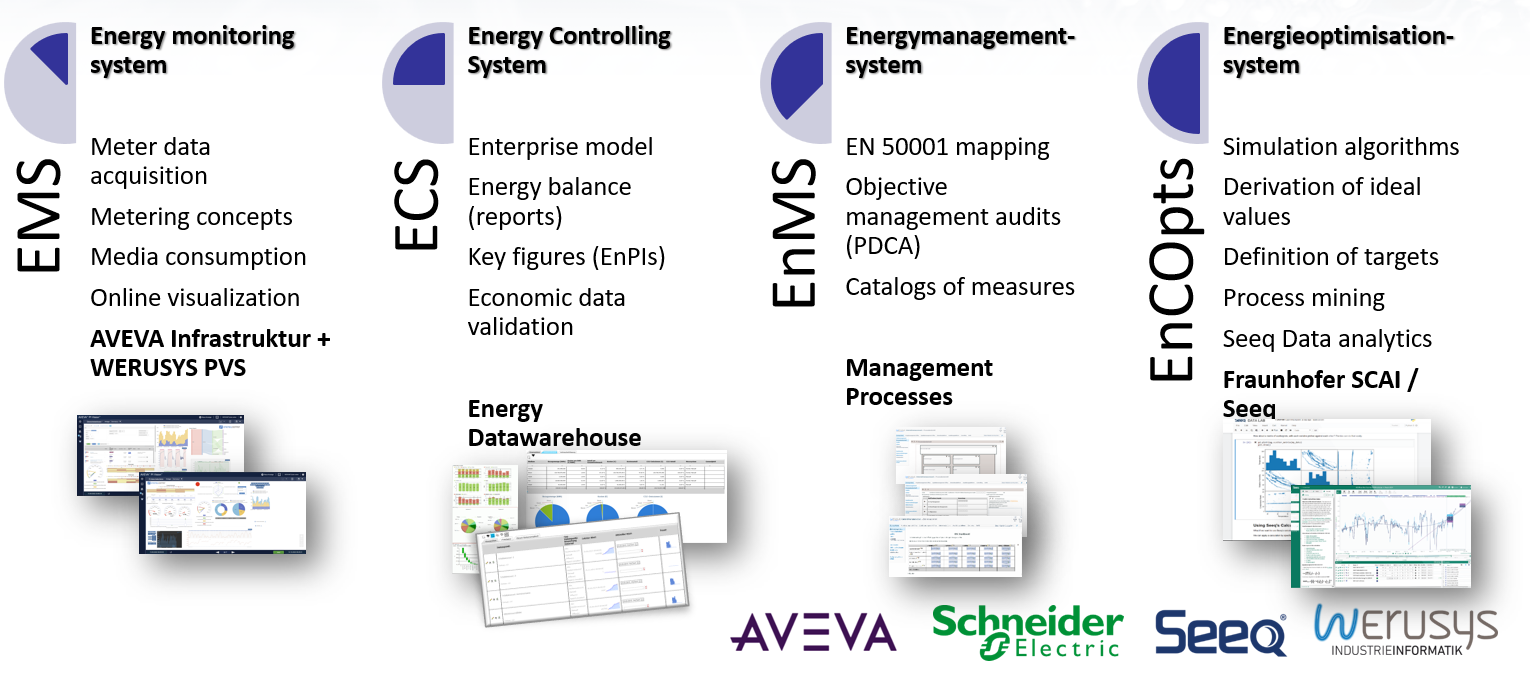
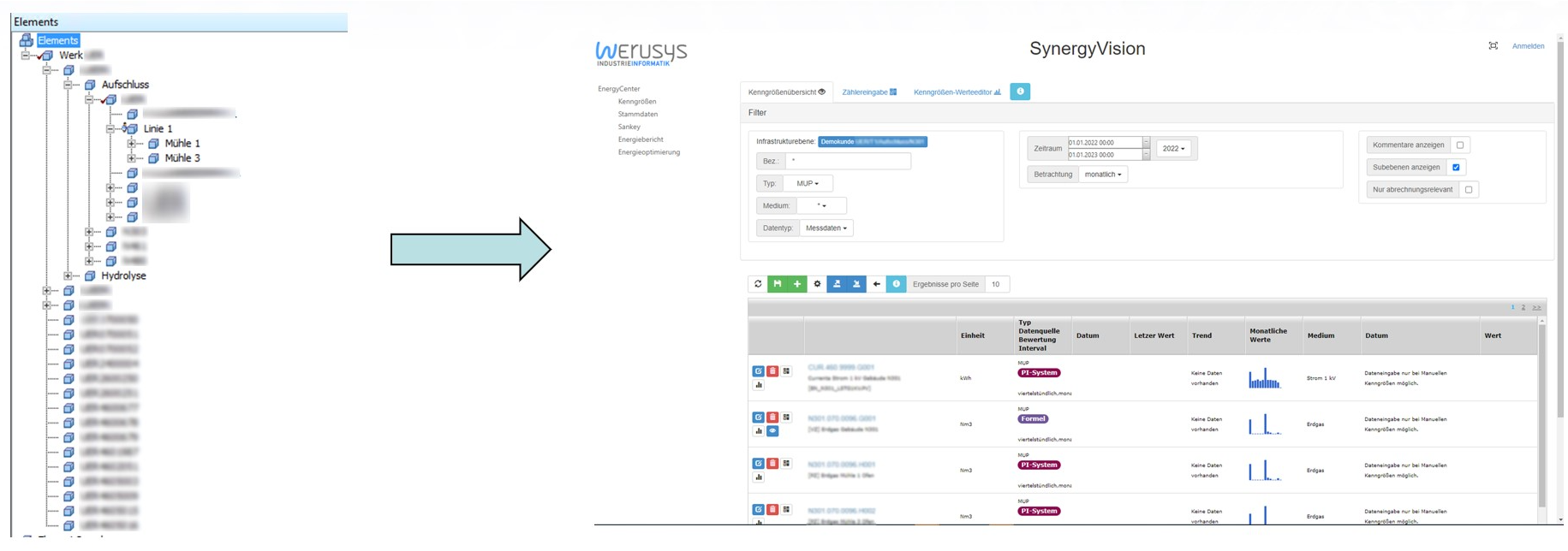
Automatic master data synchronization PI System – energy:center
With the help of automatic master data synchronization, all data and plant structures from the PI system are automatically transferred to the energy:center. This means that all existing data can be seamlessly integrated into the energy management system. Further calculations are now made within the energy:center and used in energy controlling and energy management. This enables the system to manage energy targets, cost centers, energy suppliers and prices (optional connection to energy exchanges) in direct connection with all existing PI data.
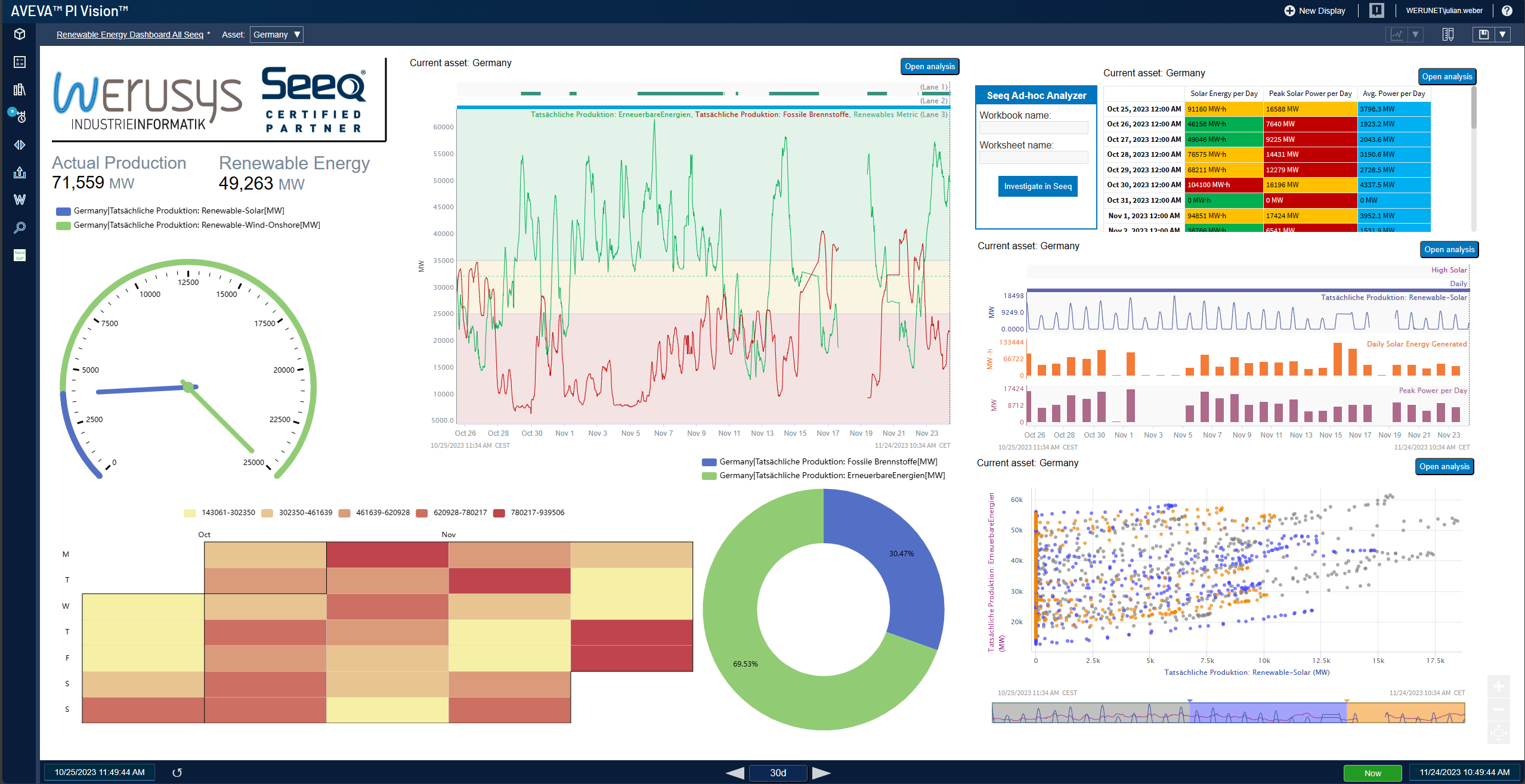
PI Vision for Energymonitoring
PI Vision is a visualization tool provided by the PI System that can be used to support energy management initiatives by providing an intuitive, user-friendly interface for energy data visualization and analysis. Here are a few ways PI Vision can help with energy monitoring and energy management:
- Real-time monitoring: PI Vision can be used to create custom dashboards that display real-time data on energy consumption and performance, enabling organizations to monitor energy usage in real-time and identify opportunities for optimization.
- Visualization: PI Vision provides a range of data visualization tools, such as charts, graphs, and heat maps, that enable organizations to gain insights into energy usage patterns and trends, and to identify areas for improvement.
- Analysis: PI Vision includes advanced analytical capabilities that enable organizations to perform complex calculations and statistical analyses on energy data, such as identifying correlations between energy usage and production output.
- Reporting: PI Vision can be used to create custom reports on energy consumption and performance, providing stakeholders with clear and concise information on energy usage and performance.
- Energy optimization: By providing real-time data and analytics, PI Vision can be used to optimize energy usage, such as adjusting equipment settings or optimizing production schedules.
- Measurement and verification: PI Vision can be used to accurately measure and verify the energy savings achieved through energy management initiatives, providing organizations with the data they need to demonstrate the financial and environmental benefits of their efforts.
PI Vision is a powerful tool for energy monitoring and energy management, providing organizations with the data visualization, analysis, and reporting capabilities they need to optimize energy usage, reduce waste, and achieve their energy reduction goals.